
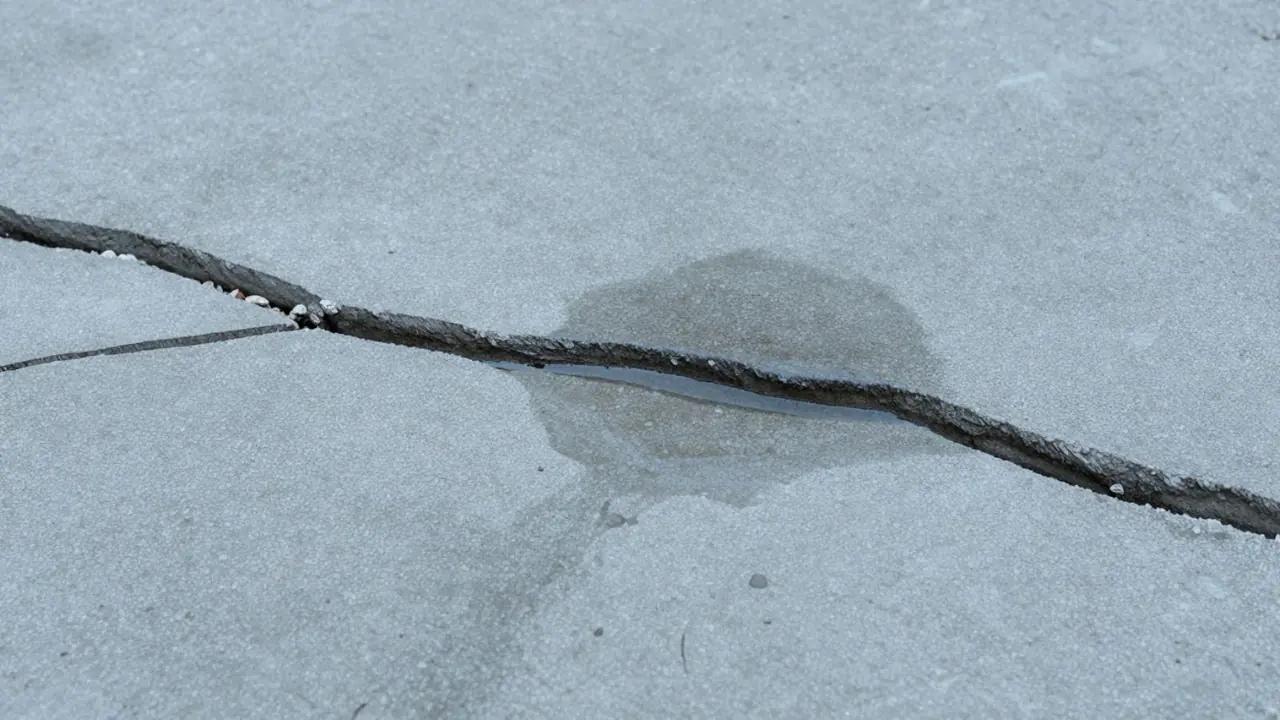
Water spreading under your floor right now: first-hour safety steps
If you suspect a slab leak, treat it as urgent. Slab leak water damage in Calabasas, CA gets worse every hour that pressurized water keeps feeding a floor. Someone answers our phone line around the clock, and a licensed, insured contractor goes out as soon as crew capacity allows. Until then, go through the steps below.
- Close the main water valve. If water stops moving, the leak is on the pressurized side of the house.
- Call a plumber for leak detection. Restoration crews dry the building but do not repair pipes.
- Cut power to soaked rooms at the breaker box, but only when the floor around it is dry and you never have to wade through water to get there.
- Lift rugs, boxes and furniture off wet flooring, and keep people and pets off slick floors.
- Photograph damp spots, the meter and any wet baseboards before anything is moved.
What a slab leak is and whether this page fits your home
A slab leak is a break or pinhole in a water supply line that runs in or under a concrete slab foundation. Water pushes up into flooring or sideways into walls, and a hot line can leave a warm spot you can feel with bare feet.
We found no published count of slab leaks in Calabasas, so we will not call them common or rare here. This page applies only if your home sits on a slab. If you have a raised foundation, the problem is a different one and a plumber or crew can tell you which applies.
Underground lines do fail in this area. NBC Los Angeles reported in 2024 that a broken water line caused a landslide near Thousand Oaks Blvd and Las Virgenes Road that affected at least 20 homes. That was a street-side line, not a slab leak, but it shows why a steady leak should be checked quickly rather than ignored. A sudden failure of a visible supply line above the floor is covered on the burst pipe water damage page.
Suspect water under the floor?
Close the main valve, call a plumber, then call the 24/7 line so drying can start while the pipe is fixed.
Call (818) 337-2642Signs that point to a slab leak, and what they mean
- A floor spot that stays warm, which can mean a leaking hot line under the concrete.
- The sound of running water when every fixture is off.
- A water bill that climbs with no change in how you live.
- Damp carpet, lifting laminate or cupped wood that follows a line rather than a room edge.
- Baseboards that swell or stain along an interior wall, or a musty smell from one area.
No single sign proves a slab leak. A dripping fixture, an irrigation line or a leaking drain can mimic several of them. That is why the next step is a test rather than a guess.
The meter test and who fixes what
The Las Virgenes Municipal Water District, which serves the area, says a good way to check for leaks is to read your meter before and after a 15 minute period when no water is being used. If the reading is not exactly the same afterward, you probably have a leak. Turn off every tap, appliance and sprinkler first, and write down both readings and the time.
Mark that result for the plumber. A moving meter with fixtures off points to a leak somewhere past the meter, which could be in the slab, a wall or the yard.
A plumber then pinpoints the leak with acoustic or thermal tools. Repair may mean rerouting the line overhead, or opening the slab, and that access work belongs to the plumber. Restoration begins once the water is shut off, and sometimes sooner if the floors are saturated. Neither trade does the other's job.
Our process after the pipe is under control
Drying a slab home is mostly about what sits on top of and beside the concrete. Technicians begin by scanning with a thermal imager and pin-style moisture meters, which show where the water traveled, and they compare each reading against an unaffected patch of identical material.
Wet carpet and pad are lifted and usually removed. Water trapped under laminate, vinyl or engineered wood is extracted, and boards that cup or swell may have to come out. Baseboards are pulled and wall cavities are opened or drilled when readings show water inside them.
Air movers push air across the floor and LGR dehumidifiers pull moisture from the room. Where flooring covers wet concrete, drying mats or panels can draw moisture out. Slab surfaces are slow to dry, so technicians return to log readings until they match the goal in ANSI/IICRC S500. The full multi-day method is on the structural drying and dehumidification page.
Slab leak insurance questions to ask before you sign anything
Sudden damage and slow leaks are treated differently
Coverage under a typical homeowners policy leans toward abrupt, unexpected water events, and gradual seepage or long-ignored leaks are often excluded. A slab leak can be either, and the date it started matters. Some policies also treat the cost of reaching the pipe differently from the damage it caused. Read the water damage wording in your own policy, then ask the insurer how each situation would be treated.
Photographs, the meter readings and the plumber's written findings help your claim file. A restoration crew documents moisture and materials but does not decide coverage.
What changes the cost of slab leak water damage
No honest number exists until someone has measured the wet area, so call for a real quote. These factors move the total most.
- How long the leak ran before it was found.
- Whether the water was a clean supply line or mixed with other sources.
- Flooring type, since carpet, tile and floating floors react differently.
- How far water traveled into walls, cabinets and subfloor.
- Drying days needed and how much equipment the rooms require.
Plumbing repair and slab access are billed separately by the plumber.
Errors that make it worse, and habits that prevent the next leak
Do not wait to see whether a warm spot goes away. Do not run heaters or fans over damp flooring to hurry it, and do not seal wet concrete under new flooring. Trapped moisture is how a small leak becomes a bigger repair.
LVMWD also advises customers to check fixtures, appliances and irrigation systems regularly for leaks and to repair them. A meter reading taken once a season takes minutes and gives you a baseline to compare against.
We also dispatch to homes in Woodland Hills and Topanga, and the steps above apply there too.
Frequently asked questions
Is emergency slab leak water damage service available in Calabasas?
Yes. Call the 24/7 line and describe the signs. A crew can be sent to start extracting and drying when one is available, though the plumber still has to find and fix the pipe.
How can I tell whether I have a slab leak or a dripping fixture?
Shut off every tap and appliance, then read the meter twice, 15 minutes apart. A moving reading means water is leaking somewhere past the meter. A warm floor patch or a hiss from the floor points toward the slab.
Will the concrete have to be broken?
Not always. A plumber may reroute the line through walls or the attic, or open the slab at the leak. That decision and the work are the plumber's, and restoration follows.
Do you repair the leaking pipe?
No. Plumbers repair pipes. The restoration crew extracts water, removes materials that cannot dry, and dries the structure with air movers and dehumidifiers.
Will my insurance pay for slab leak damage?
It depends on the policy and on whether the leak was sudden or gradual. Read your policy and ask your insurer. The restoration side only documents the damage.
How long does drying take after a slab leak?
It varies with the flooring, how long the leak ran and how thick the slab and wall materials are. Technicians take readings each visit and stop when the materials reach the dry goal.