
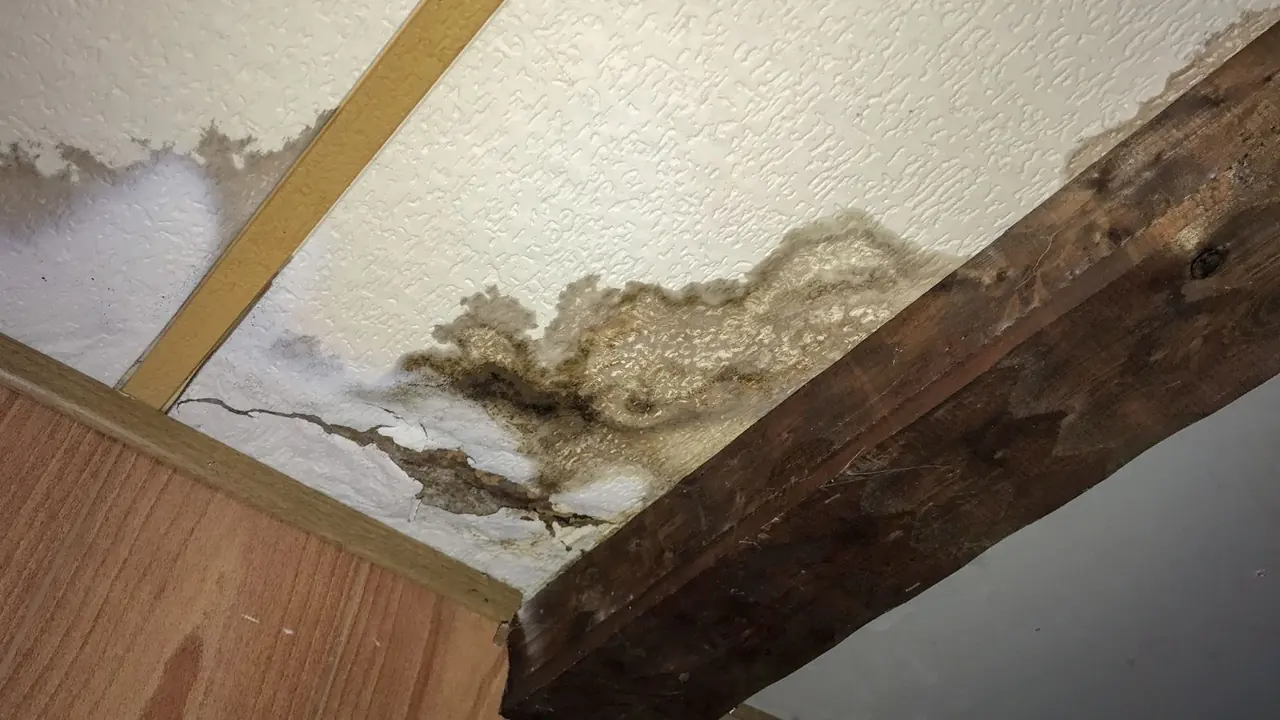
Rain is coming through the roof right now
Roof leak water damage in Calabasas, CA starts above your head and usually gets noticed late. Water enters at a flashing, a cracked tile or a worn shingle, runs down a rafter, and soaks attic insulation before any stain shows on the ceiling below. The phone line stays staffed around the clock, and a crew that holds the proper license and carries insurance goes out once a team opens up.
While you wait, move what you can out of the room under the drip and set a bucket on a towel. If a ceiling bulges with trapped water, poke a small hole at the lowest point into a bucket to relieve it, standing clear of the bulge. Keep people out of the room if the ceiling sags. Do not climb onto a wet roof.
Roof leaks follow the rain calendar
Climate normals from NOAA covering 1991-2020, recorded at the Woodland Hills station close by, show December through March as the wet stretch, and February peaks near 4.62 inches. Each month from June to September averages below 0.1 inch. A roof that held through a dry summer can fail on the first real storm, so check the attic after the first heavy rain of the season.
In its Safety Element, Calabasas warns that heavy rain may swamp the storm drain system. For a roof, the practical lesson is that clogged gutters and downspouts push water back under the eaves. Clear them before a storm, and call when water is already inside.
Water coming through the roof?
Catch the drip, keep clear of sagging ceilings and call the 24/7 line. A roofer closes the opening, we dry what got wet.
Call (818) 337-2642What you see on the ceiling and what it means
A brown ring that grows after each rain points to a roof entry. Paint that bubbles, a drywall seam that darkens, or a ceiling that feels soft all mean the board is holding water. Stains that appear only when rain falls suggest the roof. Stains that appear on dry days suggest plumbing or an air conditioner.
The stain is rarely where the roof is open. Water travels along rafters and insulation before it drops, so the hole can sit several feet uphill. That is why a ceiling patch alone fails. The wet insulation above it keeps feeding the spot.
Roofer first, restoration second: who does what
A roofer finds the opening and closes it with a tarp, board or temporary patch. A restoration crew does not repair roofs, and a roofer does not dry attics. You usually need both, in that order, because drying a space that is still taking on rain wastes the effort.
| Task | Roofer | Restoration crew |
|---|---|---|
| Find the entry point | Yes | Helps trace the water path |
| Tarp or board over the opening | Yes | Not their trade |
| Remove soaked attic insulation | No | Yes |
| Dry rafters, sheathing and ceiling | No | Yes |
| Permanent roof repair | Yes | No |
| Rebuild ceiling finish | No | See the ceiling water damage repair page |
Our process for wet attics and ceilings
Map the moisture
A moisture meter and a thermal imaging camera show which ceiling boards, rafters and insulation runs are wet, including areas that look dry.
Remove what cannot dry
Saturated batts and blown insulation hold water for weeks. The crew bags and removes them, and cuts out ceiling board that has softened or sagged.
Open the cavity
Small cuts let air reach the space between ceiling board and attic floor, so trapped water is not sealed in.
Dry with air movers and dehumidifiers
Air movers push air across wet wood and board while low-grain refrigerant dehumidifiers pull moisture from the air, following ANSI/IICRC S500 drying practice.
Log the readings
Technicians return and record moisture readings until framing and sheathing match a dry reference. Before hiring anyone, ask whether the technicians follow the S500 standard.
Rain water, old houses and what it carries
Calabasas published a Housing Element background report in January 2021. It reports that 73 percent of local homes predate 1989, with the 1980s the biggest decade at 37 percent. Roofs, flashings and attic insulation on that kind of housing have often seen decades of weather. Aged sealant and worn flashing are common entry points, so ask your roofer to check them while the roof is open.
Safety before you touch a wet ceiling
Water and wiring share the attic. Recessed lights, fan wiring and junction boxes can sit under soaked insulation. If water drips from a light fixture or the ceiling is near a switch, switch off that circuit at the breaker box, but only when both the box and the floor near it are dry. Otherwise stay out and call an electrician.
- Never stand under a ceiling that is sagging or bulging.
- Do not use a ladder on a wet roof or a wet attic floor.
- Keep children and pets out of the room until the ceiling is dry or removed.
- Pre-1978 homes may have lead paint or asbestos in some materials, so test before sanding or cutting.
What changes the cost of roof leak water damage
Any figure given before a technician looks at the attic would be a guess. These factors move the price most:
- How much insulation is wet and how deep it is.
- Whether the ceiling board can stay or has to be cut out.
- How many rooms below the leak were reached.
- Attic access, pitch and how hard the space is to work in.
- How long the water sat before drying began.
Call the round-the-clock line, and the scope and price get walked through before any work begins.
Roof leak insurance: storm versus wear
Sudden storm damage and long-term wear are treated differently
Sudden and accidental damage, such as a storm tearing off tiles, is often covered. Slow leaks from worn roofing, neglect or poor upkeep often are not, and flood is usually excluded. Read your policy, then put the question to your insurer directly.
The claims guide from the California Department of Insurance tells owners to make short-term repairs that stop more harm. Later damage might go unpaid if you skipped sensible steps, while protection costs that were reasonable can be reimbursed if you keep receipts. Keep the tarp invoice, photos of the roof opening and notes on when rain began. A restoration crew documents moisture but does not decide your claim.
Mistakes to avoid after a roof leak
- Patching the ceiling stain before the attic is dry, which traps water.
- Leaving soaked insulation in place because the surface looks fine.
- Waiting for the next storm to confirm the leak is real.
- Skipping photos of the roof, attic and ceiling before cleanup.
- Hiring any roof or repair contractor for $1,000 or more of work without checking the license, which the Contractors State License Board requires.
- Paying a large deposit up front. The CSLB suggests a deposit no larger than 10 percent of the contract, with a ceiling of $1,000 if that figure is lower.
The California Department of Public Health says porous materials left wet a day or two may need removal, and the EPA urges getting things dry inside 24 to 48 hours to head off mold. After drying, the rebuild belongs on the water damage repair page, and we also serve nearby Topanga and Westlake Village.
Frequently asked questions
Is emergency roof leak water damage service available in Calabasas?
Yes. The line is open nights, weekends and holidays, and a licensed, insured crew heads out the same day if a team is available. We do not quote a set window. Call, then tell us where the water is entering.
Do you fix the roof itself?
No. A roofer closes the opening. Our crews dry what the water reached and remove what cannot dry. Do both quickly, because drying under an open roof does not hold.
Can wet attic insulation just dry on its own?
Usually not. Saturated insulation holds water against rafters and ceiling board for weeks. It is typically bagged out, then the wood is dried with air movers and dehumidifiers.
How soon after rain should I check the attic?
Look the same day, with a flashlight and from the hatch only. Check for dark wood, damp batts and drips. Then check again after the next rain, since small entries only show in heavy storms.
Will insurance cover a roof leak?
It depends on the policy and cause. Sudden storm damage is often covered, while wear and neglect often are not. Ask your insurer, and save photos and receipts for temporary protection.