
Floodwater in the house right now: what to do while you wait
If water from outside is coming in, you need help fast. Our dispatch line runs 24/7 and can send a crew when one is available in your area. While you wait, keep everyone out of the water, including children and pets, because floodwater can carry sewage, fuel and sharp debris.
Do not wade into water that may touch outlets, a panel or a plugged-in appliance. If you can reach the main breaker without stepping in water, switch it off. If you cannot, stay out and call 911 or your utility. Lift valuables and papers onto high surfaces and photograph the waterline before anything moves.
Do not do these three things
Do not run a household vacuum on standing water. Do not touch wet electronics that are still plugged in. Do not flush toilets or run drains if sewage is backing up.
Call (818) 337-2642Why flood water gets treated differently
Restoration crews classify water by contamination. Category 1 comes from a clean source such as a supply line. Category 2 is gray water with some contamination, like a washing machine overflow. Category 3 is grossly contaminated and includes sewage, river or creek water and most surface floodwater.
Water that has crossed soil, a street or a yard is generally treated as Category 3 from the start. The published ANSI/IICRC S500 standard covers these categories, and you can ask any company whether its crews work to it.
| Category | Typical source | Porous materials (carpet, pad, drywall) | Hard surfaces |
|---|---|---|---|
| 1 | Broken supply line, clean tank overflow | Often dried in place if caught early | Dry and wipe |
| 2 | Washer or dishwasher discharge, sump overflow | Carpet pad usually removed, drywall assessed | Clean and disinfect |
| 3 | Storm runoff, creek overflow, sewage, groundwater | Usually removed and discarded | Clean, apply antimicrobial, dry fully |
Water is still coming in?
Call the 24/7 line now, tell us where the water entered, and we will walk you through safe steps while a crew is arranged.
Call (818) 337-2642Where flooding in Calabasas comes from
The City of Calabasas Safety Element says most of the city is outside designated flood zones. It also says a small portion of western Calabasas is in the 100-year floodplain, with a FEMA flood zone along Las Virgenes Creek. So your address may or may not be mapped. Look yours up on the FEMA flood map and ask the city if you are unsure.
Rain still finds a way. The nearby Woodland Hills station averages about 16.41 inches a year in the 1991 to 2020 normals, with February the wettest month at 4.62 inches. The Safety Element notes that intense rainfall can overwhelm storm drains and that FEMA zones do not account for future climate. A home outside the mapped zone can still take water through a garage door or a low patio.
Not every flood is a storm. In January 2024 a broken water line caused a landslide off Thousand Oaks Boulevard near Las Virgenes and affected at least 20 homes. The lesson for owners is simple. Know where your main shutoff is, because water trouble does not wait for rain.
The 2018 Woolsey Fire burned 96,949 acres according to CAL FIRE, and the Safety Element says it extended into the western half of the city. If your property sits below slopes that burned, ask the City of Calabasas what it recommends for drainage and debris at your address.
Basement Flooding Cleanup
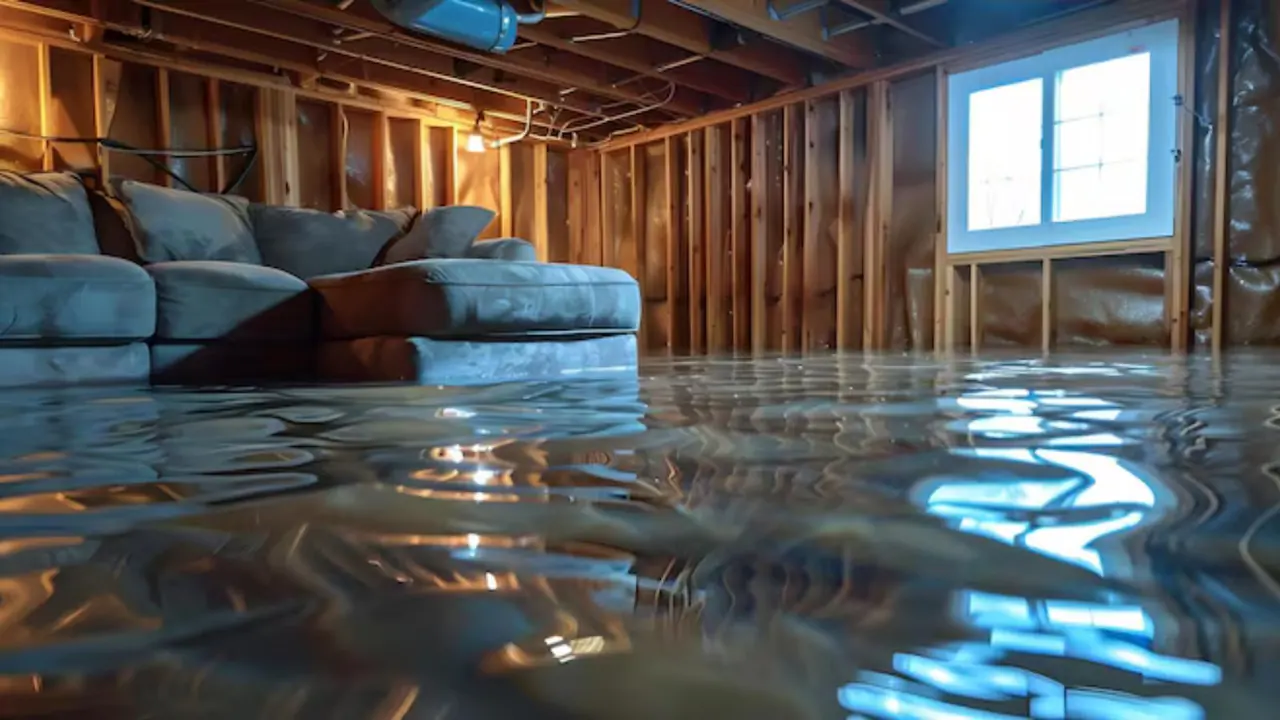
If your home has a basement or lower level, water gets there first and leaves last. Gravity pulls it down, and a below-grade room has no easy way to drain. A sump pump that fails during a storm can turn a damp corner into several inches of water in an hour or two.
The first job is safety. Standing water near a panel or a furnace needs the power off at a safe point, and a gas appliance in a flooded room should be checked before restart. Then the water is pumped out. Pulling it all at once from a saturated foundation can stress walls, so crews often lower the level in stages.
After extraction, wet carpet, pad, lower drywall and insulation are removed. Studs and slab are cleaned, treated with antimicrobial and dried with air movers and dehumidifiers until moisture readings fall. Finished lower levels dry slowly because concrete holds water.
Storage boxes on the floor are the usual casualty. Cardboard wicks water upward fast. Move anything you can onto shelves and ask the crew before discarding photos or documents, since some can be dried by a specialist.
Sewage Backup Cleanup
A sewage backup is a Category 3 loss. It can show up as water rising from a floor drain, a tub or a toilet, often after heavy runoff stresses the lines or a blockage forms downstream. Stop using water in the house, keep everyone away from the area and do not try to clean it with household towels.
If the problem may be in the public sewer, call the Las Virgenes Municipal Water District at (818) 251-2100. It is on call 24 hours for water and sewer emergencies. If the blockage is inside your own lateral, a plumber clears it.
The restoration side begins once the source is stopped. Crews extract the water, remove porous materials that absorbed it, such as carpet, pad and lower drywall, then wash and disinfect hard surfaces and dry the structure. Contents are sorted case by case.
Crews use gloves, boots, eye protection and respirators, and they seal off the area with plastic to keep contamination from spreading to clean rooms. Ask about their containment plan and how waste will be bagged and removed.
Choosing your next step after a flood
| What you see | First move | Who to call |
|---|---|---|
| Water at your door from the street or yard | Stay out of it, shut power if safe, lift valuables | 24/7 restoration line |
| Sparks, buzzing or water around the panel | Leave the area | 911 |
| Smell of gas | Leave and call from a safe place | SoCalGas 1-800-427-2200 |
| Sewage coming up from drains | Stop using water, keep out | LVMWD (818) 251-2100 and a restoration crew |
| Water mostly gone, wet walls and floors left | Start drying within a day or two | Water mitigation crew |
Flood and your insurance
Flood is usually a separate policy
The California Department of Insurance says homeowners policies typically exclude flood, mudslide and debris flow. Flood cover is generally bought separately through the federal National Flood Insurance Program (NFIP), and a 30-day waiting period is typical before it takes effect. That means a policy bought as storms arrive may not help.
Check your policy and ask your insurer what is covered. A restoration crew documents the damage and does not decide your claim.
What shapes the cost of a flood job
- Water category. Category 3 work needs more removal, disinfecting and protective gear.
- Depth and area. More square footage and deeper water mean more extraction and drying time.
- Materials affected. Carpet is simpler than finished lower-level drywall, built-ins or hardwood.
- Drying time. Slabs, crawl spaces and wet insulation hold moisture longer than open rooms.
- Access. Stairs, tight garages and long hose runs add labor.
Judging a fair figure takes a look at the damage. Describe what happened when you phone, and request a plain walkthrough of scope and price ahead of any work.
Garages and lower levels in Calabasas
Garages are often the first place stormwater enters because the slab sits close to the driveway grade. Keep stored items off the floor, and keep paint, fuel and chemicals sealed so they do not mix with floodwater.
After the water is out, drying and rebuild usually follow in two parts. Drying and cleaning fall under water damage cleanup. Standing water that needs pumping first is the work of emergency water removal. For neighbors to the west, our Westlake Village page covers the neighboring area.
Frequently asked questions
Do you handle flood damage restoration emergencies at night or on weekends in Calabasas?
Yes. Dispatch answers 24/7, including overnight storms and holiday weekends, and sends a crew when one is available. Call, say where the water is coming from and whether power or sewage is involved, and you will get instructions to follow until help reaches you.
Is floodwater considered Category 3?
Surface floodwater and creek water are generally treated as Category 3 because they pick up soil, bacteria and chemicals along the way. Crews plan for removal of porous materials and disinfecting of hard surfaces, working to the published S500 standard.
Is my Calabasas home in a flood zone?
The City Safety Element says most of Calabasas is outside designated flood zones, but a small western portion is in the 100-year floodplain and a FEMA zone follows Las Virgenes Creek. Check the FEMA flood map using your address, then ask the city if the result is unclear.
Does homeowners insurance cover flood damage?
Usually not. The California Department of Insurance says standard homeowners policies typically exclude flood, and separate flood cover is available through the NFIP. A 30-day waiting period is typical, so read your policy and ask your insurer before a storm.
Can I save my carpet after a flood?
If the water was Category 3, carpet and pad are generally removed and replaced. Area rugs may be cleaned off site, depending on material. Photograph everything first so you have records.
How soon should drying start?
As soon as the water is out. The EPA's target is 24 to 48 hours for water-damaged areas and items, and a slow start in cool, damp weather makes that harder to hit.
Who clears a sewer backup, you or a plumber?
Both may be involved. A plumber or the water district finds and clears the blockage, and the restoration crew removes the contaminated water and materials afterward. LVMWD takes sewer emergency calls at (818) 251-2100.