
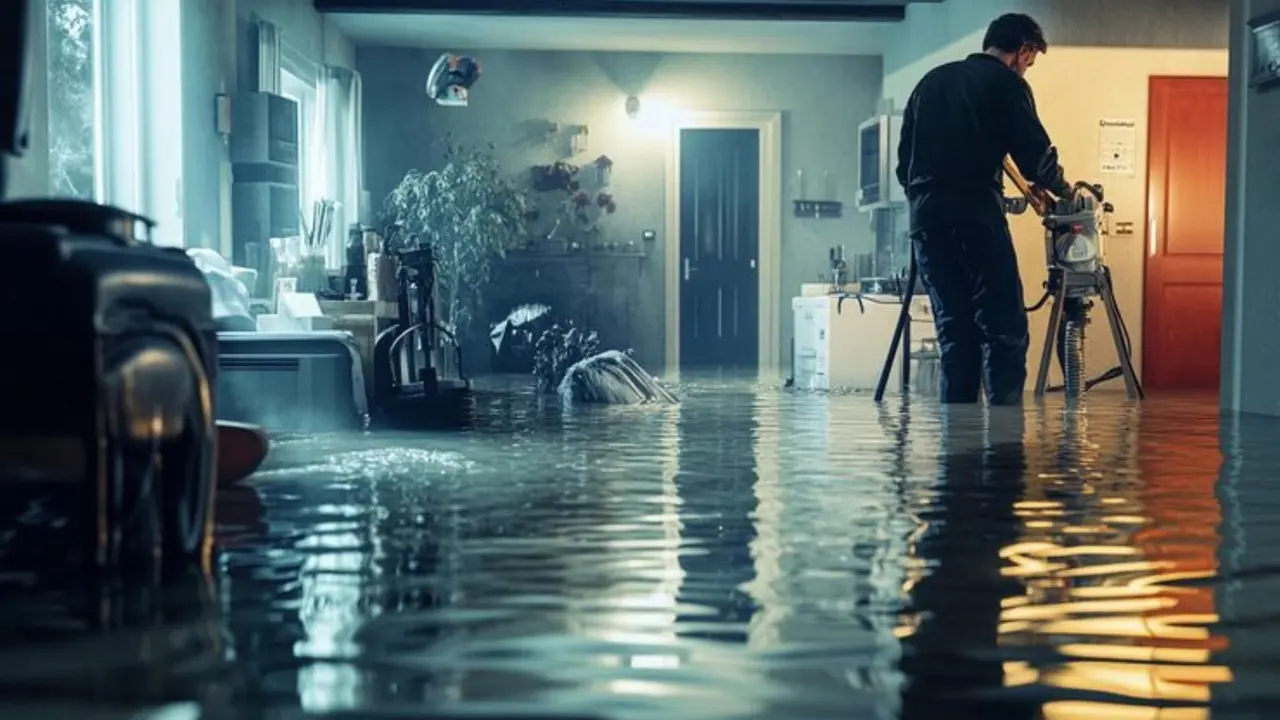
Water is spreading through your home right now
If water is still moving through a ceiling, down a wall or across a floor, you are in the window where water mitigation in Calabasas, CA makes the biggest difference. Someone answers the 24/7 line day and night, and licensed and insured professionals go out once a crew is free. While you wait, do the following.
- Stop the source. Close the main water valve, usually near the street-side meter or where the line enters the house.
- Switch off the breakers feeding wet rooms, provided the panel is dry and you can get to it without wading.
- Lift furniture legs, rugs, books and electronics out of the water. Foil or plastic under furniture legs protects wood finishes.
- Keep people and pets away from any water that came from a drain, toilet or outside.
- Photograph the damage and the source before anything is moved.
Mitigation means limiting damage, not rebuilding. It covers stopping and removing water, taking out materials that cannot dry, and starting controlled drying. Rebuilding is a separate phase, covered on the water damage repair page.
Stained ceiling, damp carpet or musty smell? That is a mitigation problem
A brown ring on the ceiling, baseboards that look slightly swollen, or carpet that feels cool and damp all mean water is somewhere it should not be. These signs often show up long after the leak started. This is where a mitigation crew comes in. It finds where the water went, removes it and dries the building before the damage becomes a rebuild.
Water still spreading?
Close the main valve, then call. Licensed and insured crews are sent the same day if one is free.
Call (818) 337-2642Structural drying: what actually happens in the first days
Structural drying is the core of mitigation. After extraction, the crew sets air movers to push dry air across wet surfaces and low-grain refrigerant (LGR) dehumidifiers to pull moisture out of the air. Together they create a gradient that draws water out of drywall, framing and subfloor.
Technicians drill small holes or lift baseboard to dry wall cavities, and they may place drying mats or panels on hardwood. Each day they return with a moisture meter and record readings in several places, comparing them with the reading of a dry, unaffected reference material. Equipment is adjusted or removed as spots reach target.
Drying time depends on the material and the weather. Light drywall can dry in a few days, while dense hardwood, plaster and thick padding take longer. The goal is to reach the dry standard described in ANSI/IICRC S500, not just to make surfaces feel dry. Surface dryness can hide a wet stud, and a wet stud is how mold gets started weeks later.
Your part is simple. Keep doors and windows closed unless told otherwise, leave equipment running, and do not unplug it to save a little electricity. A machine switched off overnight can add a day.
Why the clock matters in Calabasas homes
Roughly 73 percent of Calabasas housing was built before 1989, according to the city's 2021 Housing Element background report. In many of those homes, the original supply lines and water heaters are decades old, and a failed connection inside a wall can leak for hours before anyone notices. Check the supply line under your sink or behind your washing machine if you see a stain.
Mold generally cannot get going in materials that dry out inside a 24 to 48 hour window, per the EPA. Around 16.41 inches of rain fall in a typical year at the nearby Woodland Hills station, most of it from December to March, so a roof leak in February often arrives just before a second storm. Fast mitigation keeps one wet room from becoming three.
Mitigation options and their trade-offs
Not every wet material is dried the same way. A good scope separates what can stay from what must go. Ask the crew to explain each decision using their readings.
| Situation | Typical approach | Trade-off |
|---|---|---|
| Clean water, wet drywall at the base | Drill or lift baseboard and dry in place | Cheaper and faster, but needs daily readings to confirm it worked |
| Carpet and pad soaked by clean water | Extract, lift carpet, dry or replace the pad | Carpet can often be saved, pad often cannot |
| Drywall wet more than a foot up the wall | Cut a flood cut above the wet line and remove | More demolition now, less risk of hidden damp insulation |
| Hardwood cupping or lifting | Panel drying and slow dehumidification | Success is not certain, and refinishing may still be needed |
| Water from a drain or outside source | Remove porous materials, sanitize before drying | Higher removal scope, see the cleanup page |
When water is dirty, the work shifts toward removal and sanitizing. Our water damage cleanup page explains that side. If a lot of standing water is sitting on the floor now, the emergency water removal page covers extraction in detail.
Safety around wet electrical and unknown water
Before you touch anything
Do not walk through standing water if outlets, cords or appliances are submerged. If water is near the panel, call the utility. For a downed line or electrical emergency near your home, SCE says to call 911 and stay 100 feet away. If you smell gas, leave the house and call SoCalGas at 1-800-427-2200 from outside.
Call (818) 337-2642If the water came from a toilet, sewer line or outdoors, treat it as contaminated until a technician says otherwise. For a main water or sewer problem in the street, the LVMWD emergency line at (818) 251-2100 is on call around the clock.
What affects the cost of mitigation
These factors move the total on any mitigation job. Scope and price are laid out before any work begins, and we do not post figures on a web page because they would be guesses.
- How much of the building is wet, measured by meter rather than by eye.
- The water category: clean, gray or black.
- The materials involved, since hardwood and plaster take longer than drywall.
- How many days of equipment the structure needs, which depends on readings.
- How much must be removed rather than dried.
To get a real figure, call and describe your own situation.
Insurance and mitigation
A general note
Insurers often cover sudden and accidental losses like a burst pipe, but gradual leaks and neglect tend to be excluded, and flood generally needs its own separate coverage. The California Department of Insurance advises taking reasonable steps to prevent further damage and saving receipts. Your policy and your insurer have the answer for your case. Mitigation crews document the loss but do not decide claims.
Serving Calabasas and nearby towns
Crews work across Calabasas and the surrounding area, including Agoura Hills and Woodland Hills. If the damage includes visible mold, see our mold remediation page. For a quick overview of every service, visit the services hub.
Frequently asked questions
Do you handle water mitigation emergencies in Calabasas at night or on weekends?
Yes. Nights, weekends and holidays are all covered because the line never closes, and crews go out the same day whenever one is free. No arrival time is promised. Stop the water if you can, then call.
How do I know if my ceiling stain needs mitigation?
If the stain is growing, feels damp or has drips, treat it as active. A dry, unchanged stain may be old. A technician with a moisture meter or thermal camera can tell which in minutes, and that tells you whether drying is needed.
What is the difference between mitigation and restoration?
Mitigation is damage control: water removal, removal of unsalvageable materials and drying. Restoration is the full path, including repairs after drying. Mitigation comes first.
How long will equipment stay in my house?
Typically several days. The exact number depends on the daily moisture readings. Dense materials and humid weather add time.
Can I just run fans and a hardware store dehumidifier myself?
For a small clean-water spill on a hard floor, maybe. For wet walls, pad or subfloor, consumer equipment usually cannot reach moisture inside cavities, and you have no way to confirm it is dry. A wet stud behind fresh paint is where mold problems begin.
Will mitigation stop mold from growing?
Fast, complete drying lowers the risk, because mold needs moisture. No company can promise mold will never appear. If you see growth, remediation under ANSI/IICRC S520 practice applies, and health questions go to a physician.