
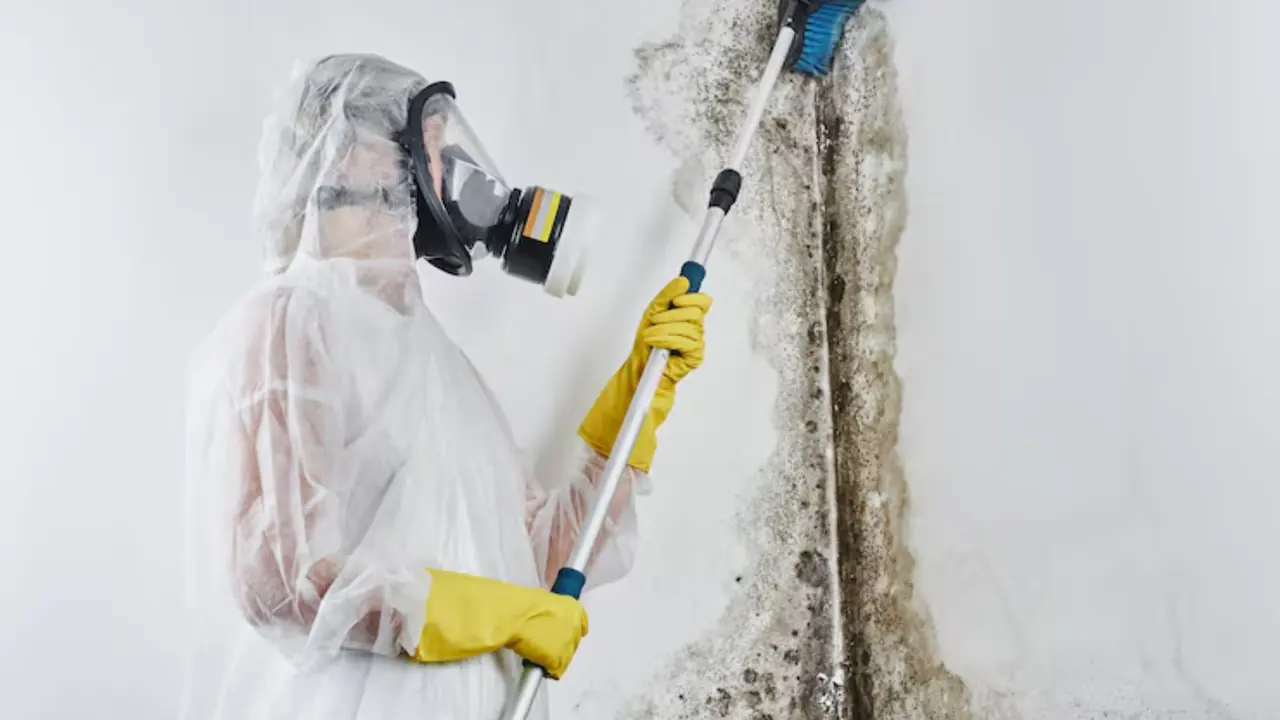
Containing and removing mold after moisture
Mold remediation in Calabasas, CA is the work of isolating a mold-affected area, removing contaminated material, cleaning what can be cleaned and drying the space so the conditions behind the growth are gone. It follows the published ANSI/IICRC S520 standard for professional mold remediation, which you can ask any company about.
This page explains what crews do, how to compare providers, and where the limits are. Crews do not diagnose health problems. Questions about symptoms go to a physician.
Musty smell or dark spots after a leak?
A damp smell in a closet, dark patches on a ceiling corner or paint that bubbles near a wall are signs that moisture has been sitting somewhere. You may not be able to tell what the spots are by looking. Color alone does not identify a mold type.
That is the point where a remediation crew becomes useful. They find the moisture, check how far it reached, and set up containment before disturbing anything. The sections below explain how that works.
Found something that looks like mold?
Describe what you see and when the water happened. We will explain what a crew would check first.
Call (818) 337-2642Mold Removal and Black Mold Cleanup
People search for black mold cleanup because dark growth looks alarming. The cleanup steps are the same for dark or light growth. The crew isolates the room with plastic sheeting, runs a HEPA air scrubber to hold the room under negative pressure, and wears protective gear so spores do not travel into clean rooms.
Porous materials such as drywall, ceiling tile, carpet and insulation are cut out and bagged. Solid surfaces like framing are cleaned with HEPA vacuums and damp wiping, and sometimes sanded or wire-brushed. Everything is dried, and the area is checked against the written scope before rebuilding starts. Waste is double-bagged and taken out with as little handling through clean rooms as possible.
Do not dry-scrub or spray bleach on a large patch yourself. Rubbing can spread spores, and a surface wipe does nothing for growth inside the wall.
For a small spot on a hard surface, the EPA mold cleanup guide covers basic steps. For anything bigger, or anything inside a wall, bring in a crew.
Mold After Water Damage
The EPA puts the drying target at 24 to 48 hours for anything water-damaged, which is the window that keeps mold from starting. The California Department of Public Health also says porous materials that stay saturated past a day or two can end up being torn out. That is why the first days after a leak matter so much.
Calabasas gets most of its rain between December and March. At the nearby Woodland Hills station, the 1991 to 2020 normals show 3.73 inches in January and 4.62 in February. Wet seasons plus a roof leak or a slow drip behind a wall can set up the conditions mold likes.
If you already had a water loss, ask the drying crew for their moisture readings. Dry readings are your best evidence that the conditions have changed. If there was a delay, check bottoms of walls, closets against exterior walls and under sinks.
A mitigation crew stops moisture from spreading in the first days. Remediation is for growth that is already there.
How to compare mold companies in California
According to the California Department of Public Health, the state has no licensing or regulations for mold inspection, assessment or remediation. That puts the burden on you. A general contractor license still matters for building work, but there is no mold-specific state credential to check.
| Ask for | What a useful answer sounds like |
|---|---|
| References | Names and numbers of past customers you can call |
| A written scope | Rooms, materials to be removed, containment method and clearance steps in writing |
| Standards | Whether crews follow ANSI/IICRC S520, and how |
| Moisture source | Who fixes the leak, and what proof of dry conditions you will see |
| Testing | Who tests and who removes. These are often separate parties to avoid a conflict of interest |
Testing, timing and when to act
The California Department of Insurance says mold testing and cleanup should happen as soon as mold is detected. Testing may tell you the spore levels or help confirm cleanup worked, but it cannot replace finding the moisture. An air sample taken once is a snapshot.
If you see growth larger than a small patch, or you see it after sewage or floodwater, treat it as a job for professionals. Smaller spots on a nonporous surface can sometimes be handled by the owner following EPA guidance.
Insurance and mold
Coverage depends on the cause. Mold that follows a sudden covered leak may be treated differently from mold that follows long-term seepage, and policies often set limits or exclusions. Read your policy and ask your insurer. Do not delay protecting the property while you wait.
What shapes the cost of mold remediation
- Size of the affected area. Square footage and height both change labor.
- What the mold is growing on. Drywall comes out easily, while framing needs cleaning and hidden cavities need opening.
- Containment and air filtration. Larger jobs need more barriers, HEPA units and monitoring.
- Moisture source. If the leak is still active, the scope grows to include drying and repair coordination.
- Testing and clearance. Sampling by a separate party adds a step but gives a record.
Cost depends on what is found behind the finish. Describe the situation by phone, and request scope and price in plain language before anything is opened up.
Honest limits
No crew can promise that mold will never return, because new moisture brings new risk. Remediation addresses the growth that is present and the conditions behind it. Staying dry afterward depends on the roof, plumbing, ventilation and humidity.
After cleanup, rebuilding is handled under water damage repair. If the cause was a large release of water, water damage cleanup covers removal and sanitizing. Homes in Topanga can see our Topanga page for nearby service.
Frequently asked questions
I smell something musty but see nothing. What should I do?
Look for moisture first: under sinks, behind furniture on exterior walls, around windows and in closets. A moisture meter can find damp framing you cannot see. If the smell persists, a remediation crew can open a small inspection point.
Is black mold more dangerous than other mold?
Color does not tell you what a growth is. Nobody can sort it by look. Treat any significant growth the same way, by containing and removing it, and ask your physician about health concerns.
How soon should I call after a leak?
Right away if the wet area was not dried within 24 to 48 hours. The EPA uses that window as its benchmark for preventing growth, and CDPH notes that porous materials wet longer than a day or two may need removal.
Does California license mold remediation companies?
No. The CDPH says the state has no regulations covering mold inspection, assessment or remediation. Ask for references, a written scope and whether the crew follows ANSI/IICRC S520.
Should I get testing before removal?
Sometimes. The California Department of Insurance says testing and cleanup should happen as soon as mold is detected. A separate tester can write the plan, which the remediation crew follows, and can clear the area afterward.
Can I paint over mold?
No. Paint covers the surface but does not remove growth or the moisture feeding it. The material has to be cleaned or removed, and the area dried first.
Will remediation stop mold coming back?
It removes what is there, but nobody can promise it will not return. Fixing the leak and controlling humidity are what keep an area dry.