
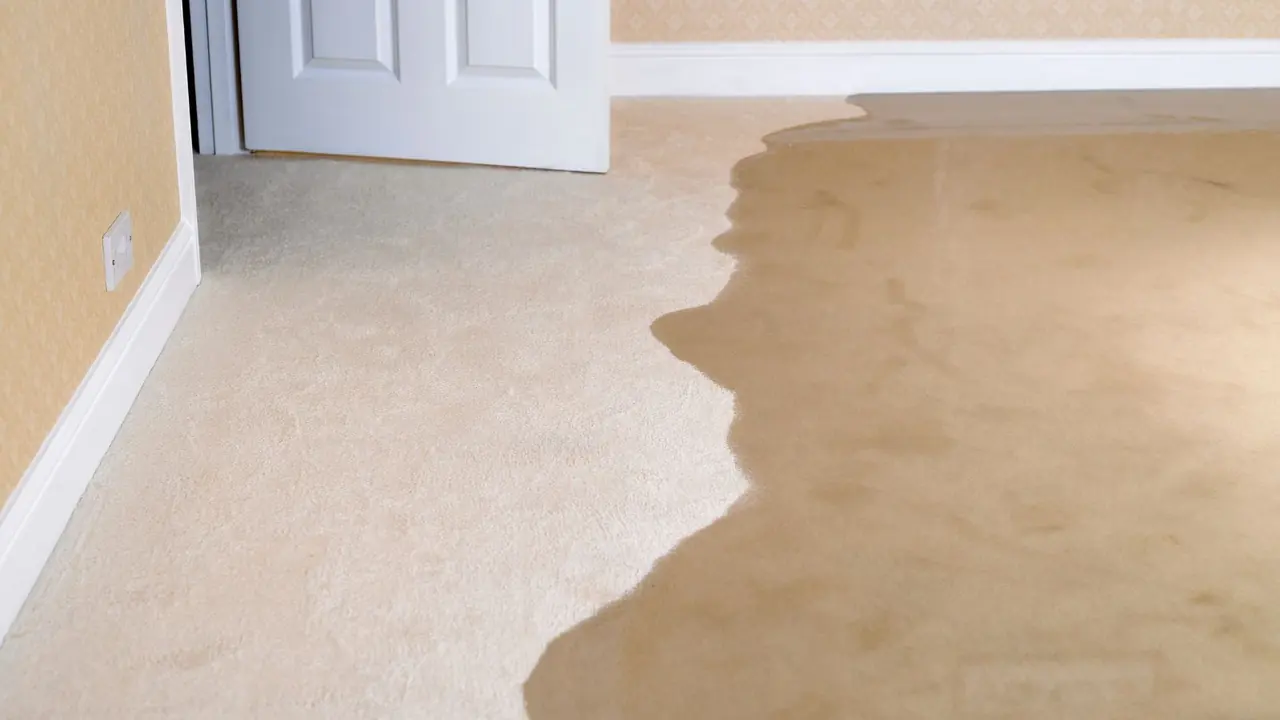
How carpets get soaked in Calabasas homes
The first thing to know about carpet water damage restoration in Calabasas, CA is that the carpet itself is only the top layer. Under it sit a foam or fiber pad, tack strip along the walls, then the subfloor. Water on the surface reaches all of them within minutes.
Most wet carpets here come from a supply line, a washing machine hose, an overflowing tub or a roof leak. The city's Safety Element shows a FEMA-mapped floodplain running beside Las Virgenes Creek across Calabasas's western edge. Ground-level rooms near the creek carry extra risk in a heavy storm, while elsewhere plumbing is the likelier cause.
Damp, cool or smelly carpet: what it means
Carpet that feels cold or squishy underfoot is holding water, even if the surface looks dry. A sour smell usually means the pad is still wet. Dark lines along baseboards, rippled backing or seams that have lifted point to water that has been there for a while.
Press a dry paper towel into the carpet and stand on it for ten seconds. A damp towel means a wet pad. A crew confirms with a moisture meter, which reads through the carpet.
Carpet soaked right now?
Shut off the water, keep off the carpet and call the 24/7 line. Expect the scope and price to be laid out before any work begins.
Call (818) 337-2642First-hour safety steps before anyone touches the carpet
Safety comes before saving anything. Water and electricity share a floor in most rooms, so a few checks matter before you start moving furniture.
- Cut off the supply first. Turn the main valve closed, or use the shutoff behind whichever toilet, washer or sink failed.
- Turn off the breakers serving the wet room, but only when you can get to the panel across dry floor. If not, call for help.
- Keep kids and animals out of the room, most of all when water backed up from a drain or toilet or blew in from outdoors.
- Lift furniture, books and electronics to dry ground. Foil or plastic blocks under legs stop stains.
If the water came from a sewer backup, the carpet is not a cleaning job. Stay out of it and wait for a crew with protective gear.
Save it or replace it: the decision, in plain terms
Restoration crews classify water by source. Category 1 comes from a clean supply line. Category 2 carries some contamination, like a washing machine drain. Category 3 is sewage or floodwater. Category and time drive the choice.
| Situation | Carpet | Pad |
|---|---|---|
| Category 1, caught within a day | Often dried in place | Often replaced, especially foam |
| Category 1, wet longer than a day or two | Case by case after readings | Usually removed |
| Category 2 | May be cleaned and dried if caught early | Removed |
| Category 3, sewage or floodwater | Removed and discarded | Removed and discarded |
Per mold guidance from the California Department of Public Health, absorbent building materials that remain saturated past a day or two may have to be torn out. Carpet pad is the textbook example. It acts like a sponge, it is cheap to replace compared with the damage it can cause, and it rarely dries well while sitting under carpet.
From extraction to re-stretch: the work sequence
Extraction
A portable or truck-mounted extractor with a weighted wand presses water out of carpet and pad in slow overlapping passes.
Lifting and pad removal
The carpet is released from the tack strip along one wall and folded back. The wet pad is cut into strips and bagged.
Drying the subfloor
Air movers blow across the exposed floor while LGR dehumidifiers pull moisture from the air. Concrete and plywood both hold water longer than they feel, so readings are logged each visit. The structural drying and dehumidification process explains the equipment in more detail.
Cleaning and treating
If the carpet is staying, it is deep cleaned and treated with an antimicrobial. A deodorizer is applied to the backing and the floor beneath.
Reinstall and re-stretch
Dry carpet goes back over new pad and is power stretched to remove ripples.
Drying targets are drawn from ANSI/IICRC S500, a published industry standard covering water loss work, and a fair question for any company is whether its technicians follow that document. A crew does not repair plumbing, so a plumber still fixes the pipe or hose that failed.
Wall-to-wall carpet, area rugs and laundry room drains
Wall-to-wall carpet is stretched over tack strip, so the whole room is affected even when one corner got wet. An area rug is simpler: it comes up, gets cleaned or replaced, and the floor beneath dries in the open.
Many laundry rooms have a floor drain, and a clogged one can send a hose failure across the hall carpet. If a drain backs up, treat it as sewage and see the water damage cleanup page.
Homes toward the foothills are routed through the Agoura Hills service area, and canyon properties through the Topanga page.
What changes the cost of carpet water damage
We do not quote numbers without knowing the room. A real figure comes from a call and a look at the floor. These factors move the price the most.
- Water category. Sewage or floodwater means full removal and disposal, while a clean supply line may allow drying in place.
- How long the carpet stayed wet. A few hours and two days are very different jobs.
- Square footage and how many rooms the water reached.
- Subfloor type. Concrete, plywood and engineered wood dry at different speeds.
Carpet jobs should start with a clear conversation on scope and cost, and a contractor demanding a big deposit is worth questioning. The Contractors State License Board recommends keeping any deposit under the smaller of two figures, 10 percent of the contract or $1,000.
Insurance and wet carpet
What a policy usually looks at
Policies commonly respond when a supply line bursts without warning, yet a slow drip or years of deferred upkeep usually falls outside them. Standard homeowners policies typically leave out flood, so that risk needs its own coverage, commonly the federal NFIP in California.
California's Department of Insurance recommends limiting further harm with temporary fixes and holding on to every receipt. Read your policy and put coverage questions to the insurer. The crew photographs the loss and logs moisture readings as documentation, yet the claim decision is not theirs.
Mistakes to avoid with wet carpet
To head off mold, the EPA says wet areas and belongings need to be dry in about 24 to 48 hours. Most mistakes come from waiting past that window or from trying to dry carpet in place without lifting it.
- Leaving the pad in place because the top looks dry.
- Running a fan across the surface without pulling carpet back.
- Walking on wet carpet, which pushes water into the pad and spreads dirt.
- Using a household vacuum or a heater on soaked fibers.
If a musty smell or dark spots appear anyway, that is a separate issue handled by mold remediation, not by carpet cleaning.
Frequently asked questions
Is emergency carpet water damage restoration available in Calabasas?
Yes. Calls to the 24/7 line are answered around the clock, and a licensed, insured crew heads to the home that day if a team has an opening. Extraction and pad removal are urgent. Reinstalling carpet is scheduled after the subfloor tests dry.
Can wet carpet be dried without replacing the pad?
Sometimes, but rarely. Foam pad holds water and dries slowly beneath carpet, so most crews cut it out and replace it. Carpet itself may stay if the water was clean and the loss is recent.
How long does it take for carpet to dry after a leak?
It depends on the water amount, the subfloor and the weather. A typical job runs a few days with daily readings. The crew stops when the floor reaches the dry standard, not on a fixed date.
Will the carpet smell go away?
Odor usually clears once the pad and subfloor are dry and the carpet is treated. A smell that stays often means trapped moisture, so ask the crew to recheck readings along the carpet edges.
Do homes near Las Virgenes Creek carry a higher carpet flood risk?
The Safety Element for the City of Calabasas marks a FEMA floodplain next to Las Virgenes Creek near the western city limit. If your home sits near it and a storm sends water through the door, treat the carpet as Category 3 and call before touching it.