
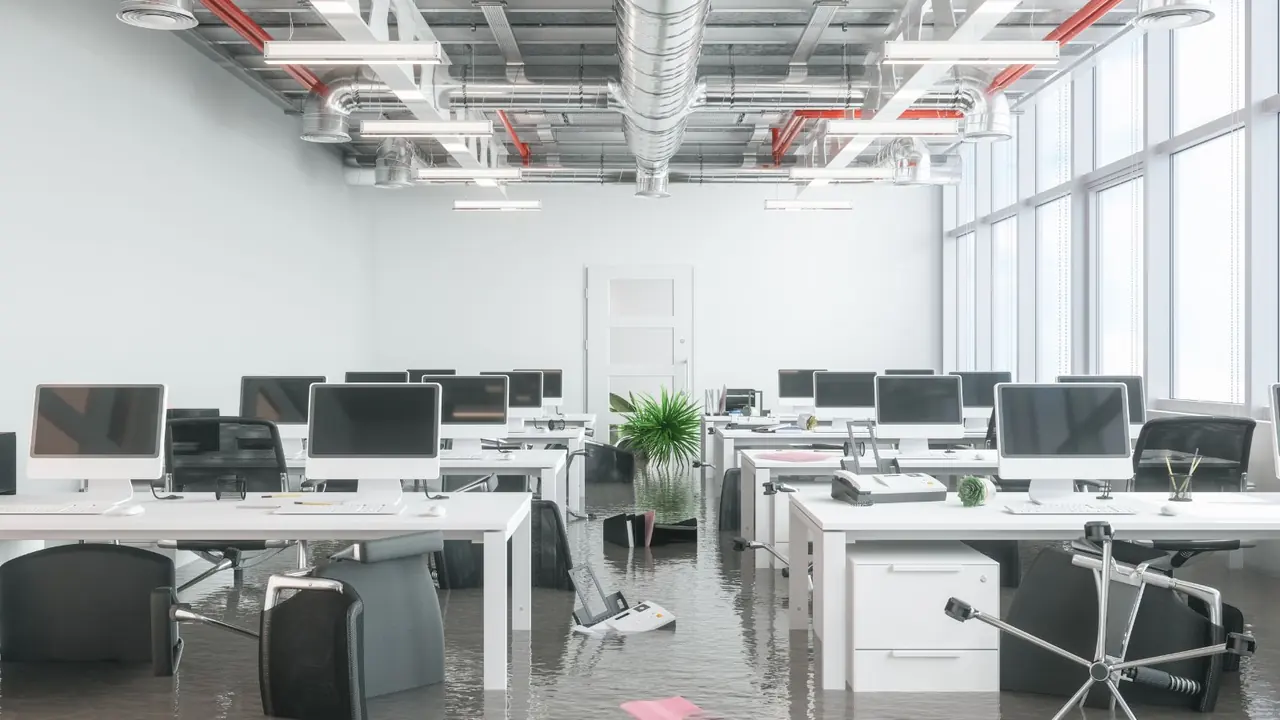
What commercial water damage restoration covers
Commercial water damage restoration in Calabasas, CA means removing water from a business space and drying the building so it can reopen. The work is the same physics as a home job, but the setting is different. Floors are bigger, ceilings hide more, and several parties have a stake in the result.
Licensed and insured crews are dispatched for extraction, structural drying, cleanup of affected finishes and moisture mapping. They do not repair building systems, value tenant inventory or decide insurance claims. Those jobs belong to a plumber or mechanical contractor, an adjuster, and the carrier.
Stained ceiling tiles, soft carpet or a musty back room
Signs of a commercial leak look familiar. Ceiling tiles sag or show brown rings, carpet squares feel cool, wall base lifts away from the floor, and a closed storeroom smells damp when you open the door. In an occupied building these clues often reach staff before they reach the owner.
Each clue tells you where to look. A stain under a restroom points to lines above. A wet corner by an exterior wall may be roof related. Take photos, note the time, and report it to whoever manages the building.
Water in the suite right now?
Shut off the water if it is safe, move stock up, then call the 24/7 line.
Call (818) 337-2642Who calls first: owner, property manager or tenant
The lease usually decides this. In many multi-tenant buildings the owner or property manager controls the roof, plumbing risers and common areas, while the tenant controls the suite interior. A leak that starts in one place and soaks another can involve both.
Before anyone orders work, find out who can authorize it and who carries the policy. A tenant who calls a crew into common space without permission can create a dispute. If water is spreading and nobody answers, protect what you can and keep a record of every call.
- Owner or manager: building structure, roof, shared plumbing, common areas.
- Tenant: suite finishes, contents, business interruption, and often the suite policy.
- Insurer or adjuster: coverage, scope approval and payment decisions.
- Restoration crew: water removal, drying, cleanup and documentation.
First-hour safety steps before crews arrive
Safety comes before salvage. Close the main water shutoff for the suite or building if you know where it is, or ask the property manager. Do not wade through standing water near panels, floor outlets, server racks or running equipment.
Cut electricity to the soaked zones alone, and approach a breaker box only if you can stand on a dry surface and get to it without obstruction. Move people out of slick corridors and put out wet-floor signs. Lift inventory, files and electronics onto desks or shelves, and call the 24/7 line. For a water or sewer emergency in the street, the Las Virgenes Municipal Water District keeps a 24-hour line at (818) 251-2100.
If the water smells like sewage
Treat it as contaminated. Keep staff and customers out, do not use fans, and do not clean it with ordinary mops. A drain backup needs protective gear and removal of porous materials, which is a different scope from clean supply water.
Call (818) 337-2642How the crew works a commercial loss
The crew starts with a walkthrough and a moisture map. Using a moisture meter and a thermal camera, technicians trace where water traveled and mark wet areas on a floor plan. That map becomes the daily record. It also shows why a leak in one suite may have reached the next.
Extraction comes next, using truck-mounted or portable units depending on access. Then comes the drying setup: air movers across floors and walls, low-grain refrigerant dehumidifiers to pull moisture from the air, and drying mats on hard floors where suitable. Wet ceiling tile, insulation and carpet pad that cannot dry in place are removed and bagged.
Technicians come back each day to log readings and shift equipment until the drying goals in ANSI/IICRC S500 are reached. When comparing bidders, put the same question to each one about that standard.
Working around operations and after hours
A business cannot always close for a week. Crews can section off affected rooms, run equipment during off hours where the scope allows, and stage work so a reception area stays usable. Tell the crew about quiet hours and available circuits.
Limits apply. After-hours work depends on crew availability, building access and the landlord's rules, and no arrival time is promised. Same-day response is offered when a crew is free. For large losses spanning many suites, scope and timing are set after the walkthrough.
What changes the cost of a commercial job
You hear the scope and the price in plain terms ahead of any work. We do not post figures because costs depend on the building. These factors move the total most.
- Square footage that is wet, found by meter reading rather than by eye.
- Water category: clean supply water, gray water or sewage.
- Materials involved, since carpet tile, slab, drywall and acoustic ceiling dry at different rates.
- Days of equipment and the number of daily monitoring visits.
- Access, after-hours work and whether sections must stay open to customers.
Call the 24/7 line and describe the space for a real scope.
Insurance and documentation for a business loss
General terms only
Commercial property policies often respond to sudden and accidental water losses, while gradual leaks and neglect are often excluded. Rising surface water from a storm is typically carved out of these policies and falls under a standalone flood policy. The California Department of Insurance advises reasonable temporary repairs and keeping your receipts. Read your policy closely and put your questions to the insurer or broker. Crews supply moisture logs and photos but do not decide claims or value stock.
Licensing, permits and local contacts
Under California rules from the Contractors State License Board, a license is needed once a job reaches $1,000 in combined labor and materials, up from $500 in 2025. Request a license number from any contractor and look it up with the board. CSLB also cautions against paying a large advance, and says the deposit should not exceed the lesser of a tenth of the contract or $1,000.
If drying leads to rebuilding, a permit may come into play. Calabasas city staff in the Building and Safety office post a distinct commercial permit application online, so check with them before opening walls. Street flooding or a clogged storm drain goes to the Public Works counter at 100 Civic Center Way, phone (818) 224-1600.
Mistakes to avoid after a business leak
- Waiting for the landlord, the tenant and the insurer to agree before protecting the space. Stop the water and dry first.
- Throwing out damaged stock or equipment before photographing it for the adjuster.
- Letting old carpet tile or ceiling panels sit wet for days, since materials that stay wet that long may need removal.
- Closing up a wall or ceiling before readings show it is dry.
If standing water is the main problem, the emergency water removal page explains extraction. For the multi-day phase, see structural drying and dehumidification.
Business spaces across the area
Crews serve Calabasas and neighboring communities, including Westlake Village and Agoura Hills. Tell the dispatcher the street address, the floor, and whether you are the owner or a tenant. That helps sort out access and authority before anyone arrives.
Frequently asked questions
Is emergency commercial water damage restoration available in Calabasas?
Yes. The 24/7 line takes calls at night, on weekends and on holidays, and a crew goes out the same day if one has an opening. No arrival time is promised. Close the water shutoff if you can reach it safely, then call.
Do I need the landlord's permission before calling?
Often yes for common areas, roofs and shared plumbing. Tenants can usually act inside their own suite, but the lease controls. Read it, tell the manager, and protect your contents while you sort out authority.
Will you repair the pipe or the roof that caused the leak?
No. A plumber, roofer or HVAC contractor fixes the source. The restoration side pulls out the water, brings the building down to dry readings and cleans the finishes that got wet. Source repair should happen first so drying is not undone.
Can you keep my business open during drying?
Sometimes. Crews can isolate wet rooms and keep other areas in use, depending on the layout and the equipment needed. A spread-out loss may force a closure. The walkthrough will show what is realistic.
Do you value my inventory and equipment for the insurer?
No. Crews photograph and log what is affected, and they can list what was moved or removed. Valuation belongs to you, your records and the adjuster.