
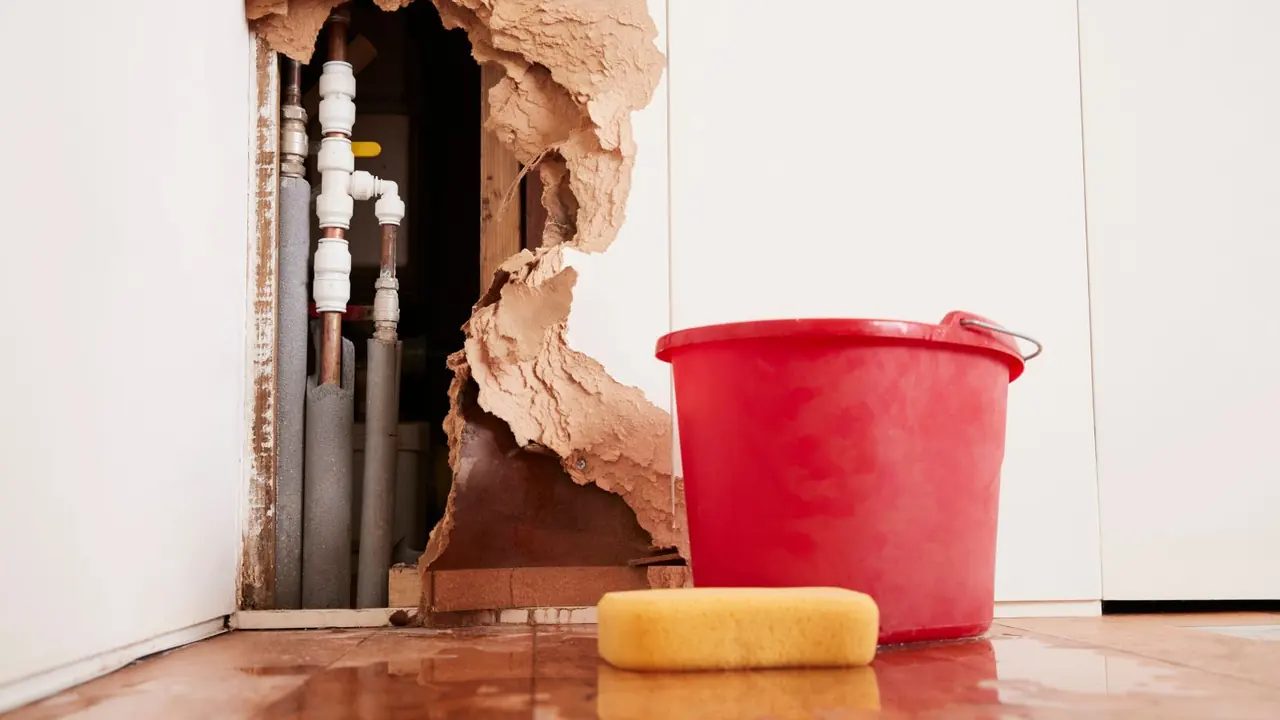
Water is pouring from a broken pipe right now
Burst pipe water damage in Calabasas, CA starts the moment a pressurized line splits, a fitting lets go or a fixture hose pops loose. Water under pressure moves fast, and a single room can be soaked in minutes. Someone answers the 24/7 line, so call as soon as the main valve is closed.
Roughly three of every four Calabasas homes, 73 percent per a Housing Element Background Report that Calabasas published in January 2021, predate 1989. Aging plumbing can fail without warning, so find your shut-off long before you need it.
What a sudden pipe failure looks like and what it means
The signs are loud: a spray or gush, a hissing sound, water running down a wall or dripping through a ceiling, a meter spinning with every tap closed. A split supply line or popped washing machine hose releases clean water, while a cracked drain line releases something worse.
That difference matters. Under the ANSI/IICRC S500 guidance, water from an intact supply line begins as Category 1, the cleanest class. Left sitting in carpet, pad and framing, it picks up bacteria and dirt and can slide toward Category 2. Time is the variable you control.
Pipe just burst? Water is still running?
Close the main valve, then call the 24/7 line and tell us how many rooms are wet. A crew can start extraction and drying while you wait on the plumber.
Call (818) 337-2642Safety steps for the first hour
Do these in order, and stop if any step puts you at risk.
- Close the main water valve. It is usually where the line enters the house or near the meter. Turn it clockwise until it stops.
- Open a low faucet or hose bib to drain what is left in the pipes and take pressure off the break.
- Flip the breakers for the soaked rooms, but only when the panel stays dry and the path to it is clear of standing water. Should water reach the outlets or the panel, keep away and phone an electrician.
- Lift rugs, shoes, books, electronics and furniture legs out of the water. Foil under wood legs prevents stains.
- Take photos and short video of the source and every wet surface before anything moves.
Then call a plumber for the repair and call the 24/7 line for the water. A restoration crew does not fix the pipe, and a plumber does not dry the house. You need both.
Who handles what after the water is off
If the break is on the street side of your meter, the problem belongs to the utility. Las Virgenes Municipal Water District staffs an around-the-clock emergency number, (818) 251-2100, for trouble on the public side of the meter. If the break is inside your property, your plumber stops it and repairs it.
A broken water line caused a landslide in Calabasas near Thousand Oaks Boulevard and Las Virgenes Road in January 2024, affecting at least 20 homes, according to an NBC Los Angeles report. That was a large main, not a house line. Still, a leak you can see outdoors, especially on a slope, deserves a call to the utility right away.
What the crew does once the leak is stopped
Once the source is controlled, the work is mostly about speed and sequence. First on site, the crew scans with a thermal camera and probes with moisture meters, mapping the route the water took, since it rarely stays in the room where the pipe broke. It often runs under baseboards, into wall bottoms and across subfloors.
- Extraction: truck-mounted or portable extractors pull standing water and wring out carpet and pad.
- Stripping: wet pad, soaked baseboard and sometimes the bottom of drywall are removed when they cannot dry in place.
- Drying: air movers push dry air across surfaces while LGR dehumidifiers pull moisture out of the room.
- Monitoring: readings are logged each visit until the materials reach dry standards.
Removing material sounds drastic, but it is often the faster path, because wet pad and soaked drywall hold water that equipment cannot reach. The first-day triage is on the water mitigation page, and the multi-day phase is explained under structural drying and dehumidification.
Why speed changes the outcome
Federal EPA guidance calls for getting wet areas and belongings dry inside a window of one to two days, which keeps mold from taking hold. Hardwood begins to cup, drywall wicks water upward, and insulation in a wall cavity can stay wet for weeks if nobody opens it.
Time also changes the category of the water. A clean supply-line flood dried the same day is a simple job. The same flood left over a weekend may call for removing more material and adding antimicrobial treatment. Homes in Woodland Hills or Agoura Hills face the same clock.
What changes the cost of a burst pipe cleanup
Nobody can responsibly quote a figure before standing in the house. Call the line and describe what you see. These are the factors that move the scope and the price:
- How long water ran before the valve was shut.
- How many rooms and floor levels were reached, and whether it dropped through a ceiling.
- Whether wall cavities and insulation are wet and need to be opened.
- How many days of equipment and monitoring are needed to reach dry standards.
Before any work begins, you are told what the job includes and what it will cost. California requires a Contractors State License Board license when labor plus materials hit $1,000. The board also recommends that a deposit stay at or under ten percent of the contract or $1,000, whichever sum is smaller.
Insurance and a sudden pipe break
Sudden and accidental versus slow and ignored
Water damage that is sudden and accidental, such as a split pipe, is frequently covered by a homeowners policy, whereas slow leaks and skipped maintenance frequently are not. Check your policy or ask your insurer how your coverage treats the cause, the pipe itself and the cleanup.
The state Department of Insurance claims guide expects policyholders to limit further loss with temporary fixes. Skipping sensible protection can leave later damage uncovered, while kept receipts let you ask your insurer to repay reasonable protection costs. A restoration crew documents moisture readings, photos and equipment logs, but it does not decide your claim. That is your insurer's call.
Mistakes to avoid after a pipe bursts
- Running a household fan or heater and calling the room dry. Surface dryness hides wet pad and wall bottoms.
- Throwing away damaged items without photos.
- Replacing flooring before the subfloor has been measured dry.
Prevention is mostly small habits. Replace old braided hoses, know where your main valve is, and consider a leak sensor near the water heater and washer. None of that replaces a plumber's inspection of aging lines.
Frequently asked questions
Is emergency burst pipe water damage service available in Calabasas?
Yes. Someone picks up at any hour, and a crew heads out as soon as one is available. Close the main valve first, then call and describe how many rooms are wet.
Should I call a plumber or a water damage company first?
Close the main valve yourself, then call both. The plumber stops and repairs the pipe, and the restoration crew removes the water and dries the structure. Neither one can do the other's job.
Is it safe to turn the power off during a flood?
Only when the panel is bone dry and the walk to it is clear of standing water. If the panel or outlets are touching water, stay away and call an electrician or the utility.
How long does it take to dry a home after a burst pipe?
It depends on how far the water spread and what the building is made of. Crews take moisture readings each visit and stop equipment only when materials reach dry standards, not on a set number of days.
Will my carpet have to be replaced?
Not always. Carpet that was soaked with clean supply-line water and extracted quickly can sometimes be saved. The pad is more often replaced, and water that has sat for a day or more or turned dirty usually means replacing both.
Do I have to pay anything upfront?
The crew lays out the job and its cost before starting. The state contractor board suggests keeping any deposit to 10 percent or $1,000, whichever is lower, so ask any company to put the terms in writing.