
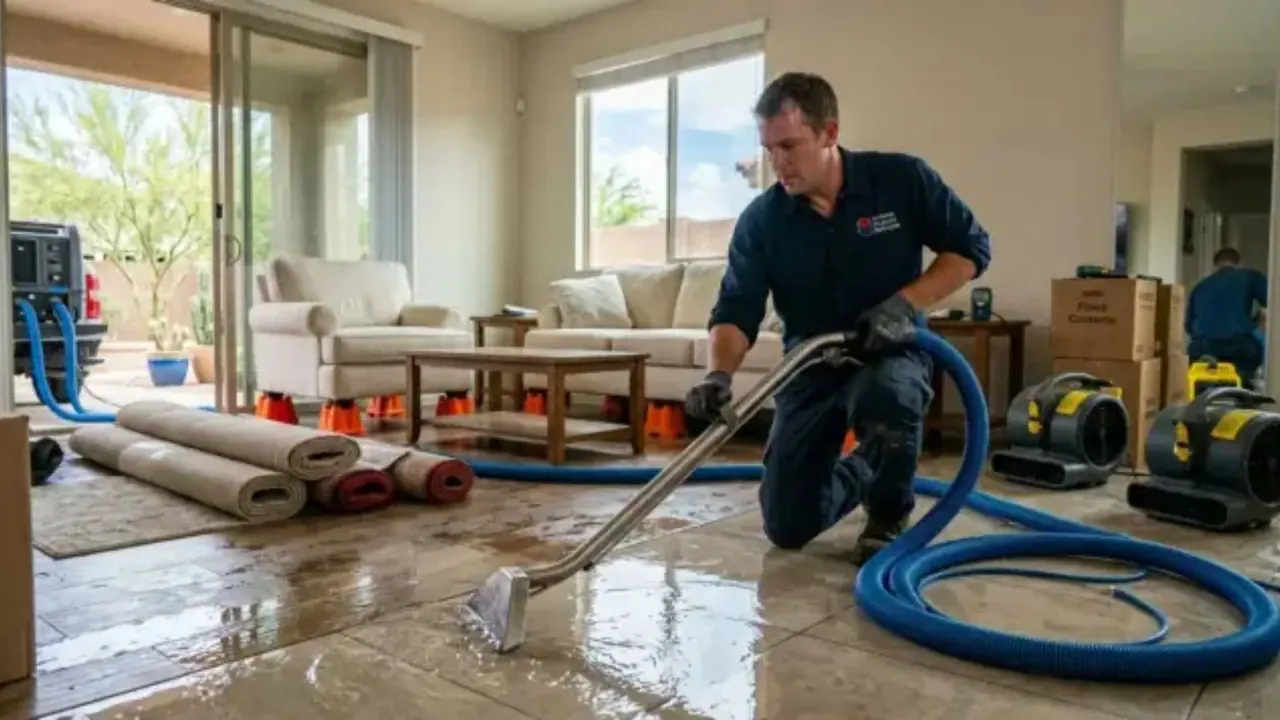
Standing water in your home right now
Every inch of water sitting on a floor is climbing into baseboards, wicking up drywall and sinking into subfloor. If you are looking at pooled water, our 24/7 line can send a crew with pumps and extractors when one is available. Call first, then work through the safety list below while you wait.
Shut off the water at the main valve if the source is inside the house. Move people and pets out of the wet area. Lift furniture legs off wet carpet with foil or plastic blocks if you can do it safely, and take rugs and small items to a dry room.
Safety first: power, gas and the water main
If water is touching an electrical panel, outlets or anything plugged in, stay out and call 911. Do not stand in water to reach a breaker. If you smell gas, leave the building and call SoCalGas at 1-800-427-2200 from a safe place, and call 911 if anyone is at risk.
If the problem is the water main before your meter, the Las Virgenes Municipal Water District answers at (818) 251-2100. Your own shutoff handles pipes after the meter.
Call (818) 337-2642How the water actually leaves the house
Different depths and surfaces call for different tools. Using the wrong one wastes time or leaves moisture behind. Here is how crews usually match equipment to the job.
| Tool | Best for | Limits |
|---|---|---|
| Submersible pump | Several inches of standing water in a garage, lower level or crawl space | Cannot pull the last film of water from a surface |
| Truck-mounted extractor | Large areas of carpet and big volumes, with strong suction from outside the house | Needs truck access and hose runs through the home |
| Portable extractor | Smaller rooms, upstairs units, tight access | Smaller tank, so more emptying trips |
| Weighted extractor | Pressing water out of carpet and pad in place | Does not help once pad is badly contaminated |
| Wet vacuum | Edges, stairs, corners and small pools | Too slow for large floors |
Extraction removes liquid water. It does not dry the building. Once the pools are gone, moisture still sits in framing, drywall and subfloor, which is where water mitigation and structural drying picks up.
Water on the floor?
Call the 24/7 line, tell us what is flowing and where, and get safe steps to follow right away.
Call (818) 337-2642Burst Pipe Water Damage
A burst pipe can put out gallons a minute, and a pinhole behind a wall can run for days. Either way, the first step is the same. Close the main shutoff, then open a faucet at the lowest point to drain the line and ease pressure. If the break is a hot supply line, turn off the water heater as well.
Water inside a wall cavity is the hard case. It runs down the framing, collects at the bottom plate and can soak insulation without showing at the surface. Crews use moisture meters and thermal imaging to follow it, and small holes are often cut at the baseboard to let the water drain.
Supply line water is generally clean at first, which often makes materials easier to save if it is removed quickly. The longer it sits, the more it picks up from dust and building materials.
A restoration crew removes water and begins drying. A licensed plumber repairs the pipe. Ask for the plumber's invoice and photos of the failed section, since your insurer may ask for them.
What happens on the job
Check hazards
Power, gas and contamination are assessed before any equipment is plugged in.
Find the extent
Moisture meters show where water traveled, and it is often farther than the visible puddle.
Extract
Pumps clear the depth, then extractors pull water from carpet, pad and hard floors.
Remove what cannot be saved
Sodden pad and any contaminated materials are cut out so they stop feeding moisture to the room.
Hand off to drying
Air movers and dehumidifiers are set so the structure, not just the surface, reaches dry readings.
A crew does not repair plumbing, rule on your claim or promise that every material will survive. They tell you what they see and what each choice involves.
Insurance and getting water out fast
Document first, then ask your insurer
Coverage tends to follow the cause. A sudden burst or overflow is often covered, slow seepage and neglect often are not, and flood from outside typically needs separate flood cover. The Department of Insurance in California tells homeowners to make temporary repairs against further damage and keep receipts. Before deciding what to throw out, photograph it and check your policy with your insurer.
What affects the price of water removal
- Depth and volume. A film of water and a foot of it are different jobs.
- Floor type. Carpet and pad take more steps than sealed tile or concrete.
- Source and cleanliness. Sewage or surface water adds disposal and protective gear.
- Access. Stairs, upper floors and long distances from the truck add labor.
- Time of call. Night and weekend dispatch can differ from daytime work.
A real figure depends on what the crew sees, so phone in and ask for the scope in plain terms before work starts.
Getting equipment to Calabasas homes
The City Safety Element notes that 18 neighborhoods in Calabasas have only a single access road. For a truck-mounted unit, that means parking and hose runs deserve a quick conversation when you call. Tell dispatch about gated entrances, narrow streets and steep driveways so the right equipment is sent.
If the water is rising from outside rather than a pipe, read about flood damage restoration. When walls and flooring need rebuilding later, water damage repair covers that stage. Neighbors in Woodland Hills can also see our Woodland Hills page.
Frequently asked questions
Do you handle emergency water removal at night or on weekends in Calabasas?
Yes. Calls are answered around the clock, and a crew is sent when one is available. Give your address, tell dispatch what is causing the water and whether the power is off, and follow the safety steps while you wait.
What is the difference between water removal and water mitigation?
Removal is getting the liquid out with pumps and extractors. Mitigation is the whole first-days effort, including drying framing and drywall, and it starts after the pools are gone.
Can I use a shop vacuum myself?
For a small spill on a tile floor, yes, if no electrical hazard is nearby. For more than a few gallons or any water on carpet, the pad underneath stays wet and a proper extractor does a better job.
How do I know the main valve is mine and not the district's?
The shutoff at the house, usually near the meter or where the line enters, is yours. Problems upstream of the meter belong to the water district, and LVMWD takes those calls at (818) 251-2100.
Will my carpet survive extraction?
Sometimes. Clean water caught within a day or so often lets carpet be saved while the pad is replaced. Sewage or floodwater usually means carpet is discarded.
What should I photograph before the crew arrives?
The waterline on walls, the source of the leak, the affected rooms and any damaged belongings. Add a short video walkthrough if you can. Do this from a dry, safe spot.
Do I need to move furniture first?
Only if it is safe. Lift small items and papers out of the water. Heavy furniture can wait for the crew, who can block legs and protect your floor.