
How a kitchen gets wet and what it soaks
Kitchen water damage restoration in Calabasas, CA deals with a room where water usually starts low and hides. A sink supply line weeps inside the base cabinet. A dishwasher drain loosens behind the toe-kick. An ice-maker line drips under the refrigerator for weeks.
The water follows gravity and wicking. It enters the cabinet floor, runs under the cabinet boxes, and soaks into the subfloor and the bottom of the wall behind. By the time a puddle shows on the tile, the cabinet cavities are often already wet.
Calabasas had roughly 9,230 homes and apartments in 2020 per the city's housing background study, and single-family houses made up most of that stock. A typical kitchen here rests on a ground-level floor system, so leaked water drains into framing rather than dripping through a ceiling beneath.
Signs the damage is bigger than the puddle
- Cabinet bases that swell, bubble at the laminate or show dark seams usually have particleboard that absorbed water. That material rarely returns to its original shape.
- Tile that sounds hollow, or grout lines that stay dark for days, point to moisture in the mortar bed or subfloor.
- Wood or laminate flooring that cups at the edges or lifts near the dishwasher means water is trapped beneath it.
- A musty smell when you open the sink cabinet means a cavity is holding dampness even if the surface feels dry.
Water under the sink or behind the dishwasher?
Shut off the water, snap a few photos, and call the 24/7 line to talk through what the crew should check first.
Call (818) 337-2642First-hour safety steps in a wet kitchen
A kitchen mixes water with outlets, appliances and a gas line, so safety comes first. Shut off the water at the fixture's angle stop under the sink, or at the main valve if you cannot find it. If the water is spreading near outlets or the range, turn off the breaker for that circuit only if you can reach the panel without standing in water.
- Stop the source with the angle stop or main valve. A plumber or appliance technician then repairs the line, which is not restoration work.
- Unplug the dishwasher, refrigerator and small appliances only if the cords are dry and you are standing on a dry surface.
- If you smell gas, leave the home and call the gas utility. Do not flip switches.
- Lift rugs, food and pantry items off the wet floor, and keep children and pets out.
- Photograph the cabinets, floor and appliance before anything moves, then call the 24/7 line.
Our process for a kitchen loss
The crew starts by finding the extent of the wetting. A moisture meter checks cabinet sides, toe-kicks, the lower drywall and the subfloor. A thermal camera shows cool, wet patches behind finishes without cutting into them. Standing water goes first, with extraction wands on hard floors and a pump for deeper pooling.
Pull the appliances and toe-kicks
The dishwasher and refrigerator slide out so the floor and the cabinet cavity are visible and reachable.
Decide what stays
Solid wood and plywood boxes can often dry in place. Swollen particleboard and soaked insulation usually come out.
Open the cavities
Small holes or removed toe-kick boards let air and dry air reach the space behind and under the cabinets.
Dry with controlled air
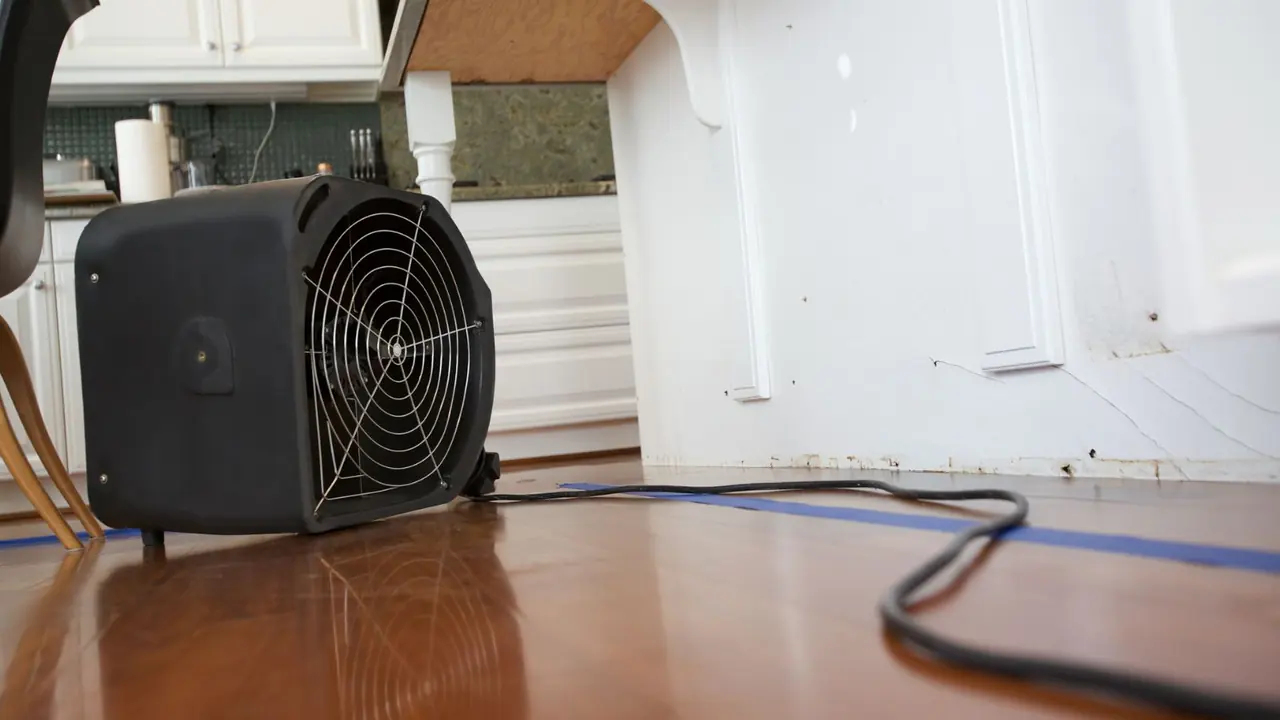
Air movers push air across surfaces while an LGR dehumidifier pulls moisture out of the room. Readings are logged each visit.
Before you sign, ask whether the team works from ANSI/IICRC S500, which is the industry reference document for this trade. The rebuild afterward, including new flooring and countertops, is covered on the water damage repair page.
What can be saved and what cannot
| Material | Often saved | Often replaced |
|---|---|---|
| Solid wood or plywood cabinet boxes | Dried in place if caught early | Swollen, delaminated or stained through |
| Particleboard cabinet bases | Rarely | Usually, once swollen |
| Stone or solid-surface countertops | Yes, if the base is removed and replaced carefully | Only if cracked during removal |
| Ceramic or porcelain tile | Tile itself, often | Tile over a soaked mortar bed or subfloor |
Older kitchens and the pre-1978 question
That same study notes that the older parts of town date mainly to the 60s, 70s and 80s. Plenty of kitchens from that era have original subfloor, old vinyl underlay or layered paint. If your home was built before 1978, tell the crew before anyone sands, cuts or scrapes.
Federal lead renovation rules require lead-safe methods when a paid crew disturbs paint in a house constructed ahead of 1978. State contractor regulators add that a building erected or renovated during 1945 to 1978 can hold asbestos-containing products. Testing happens before anything suspect is disturbed.
What changes the cost of a kitchen job
No honest number exists before someone has looked at the room. Several variables push the final figure higher or lower, listed below. When you call the 24/7 line, a technician lays out the work plan and the dollar range for the job ahead of any demolition or equipment setup.
- How long the water sat before drying began, since time changes how much material fails.
- Whether the water was clean supply water or came from a drain, which affects cleaning and disposal.
- How many cabinets, how much flooring and how much wall are wet.
- Cabinet and countertop type, because stone or custom boxes need careful removal.
How insurance usually treats a kitchen leak
Sudden damage versus slow seepage
Most homeowners coverage is written around abrupt, unexpected water events like a burst hose. Slow drips, ongoing seepage and deferred maintenance tend to fall outside it. Read your policy and ask the carrier which category your loss fits.
State insurance regulators suggest taking sensible interim steps so the damage does not grow, and keeping receipts for whatever you spend protecting the home. A restoration crew documents moisture readings and photos, but it does not decide your claim.
Mistakes to avoid after a kitchen leak
- Running a fan at the visible puddle and ignoring the cabinet cavity underneath.
- Laying new flooring or sealing a toe-kick before the subfloor reads dry.
- Caulking over a swollen cabinet base to hide it, which traps moisture.
- Waiting on the repair quote while materials stay wet. Federal guidance puts the drying window at about one to two days if you want to keep mold from taking hold.
- Signing with a contractor without confirming a valid state license, which matters once labor plus materials reach four figures.
If the failure came from the dishwasher, refrigerator line or another appliance, the appliance leak water damage page explains the cause side. For neighbors in the surrounding areas, see how we work in West Hills and Woodland Hills.
Frequently asked questions
Is emergency kitchen water damage restoration available in Calabasas?
Yes. The 24/7 line takes kitchen leaks at any hour, and same-day response is offered when available. Extraction, drying and protection of the cabinets and subfloor are the urgent parts. The rebuild of cabinets, countertops and flooring is scheduled after the room is dry.
Can wet kitchen cabinets be dried instead of replaced?
Often, yes, if they are solid wood or plywood and the water was clean. The crew opens toe-kicks, checks readings inside the boxes and dries them with air movers. Particleboard that has swollen or crumbled usually cannot be restored.
Who fixes the leaking pipe or dishwasher itself?
A plumber or appliance technician repairs the supply line, drain or machine. Restoration crews dry and clean the room but do not replace plumbing. Getting the source fixed first stops new water from undoing the drying.
How do I know the subfloor under the kitchen is dry?
A moisture meter reading on the subfloor and the framing, taken against a dry reference in an unaffected room, is the check. Surface feel is not reliable. The crew records readings each visit and stops drying when they match.
Does kitchen water damage mean I need a mold test?
Not automatically. Mold needs moisture and time, which is why fast drying matters. If you see or smell growth after the area has dried, a separate assessment under S520 practice applies, and the water mitigation page covers the early steps. Health questions go to a physician.