
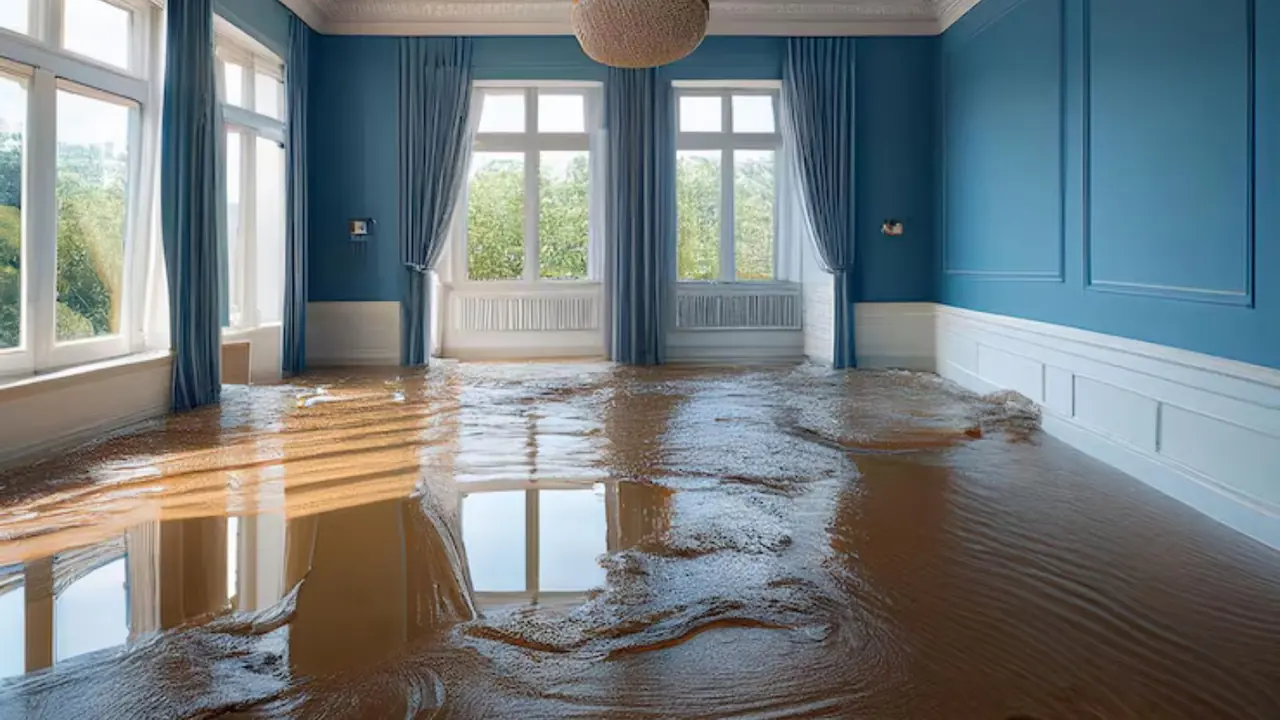
Read the boards before you decide anything
Wood takes on water through its grain and swells, and the way it swells tells you where the water came from. Floors that have been wet show a few distinct shapes, and each one points to a different cause and a different timeline.
Cupping means the edges of each board rise above the center, like a shallow tray. It usually comes from moisture below the boards, such as a leak, a damp subfloor or a slab. Crowning is the reverse, with the center higher than the edges. It can appear when a cupped floor is sanded flat before it has fully dried, or when moisture reaches the surface from above.
Buckling is the severe version. Boards lift off the subfloor, sometimes in a ridge, because the swelling has no room to go. Gaps between boards can appear later, as wet wood shrinks back.
Why subfloor moisture decides the outcome
The surface can feel dry while the plywood or slab underneath still holds water. Sanding and finishing over it is the most common reason repairs fail, because the boards keep moving. The test is simple: the floor is ready when its readings match a dry reference from the same house.
A technician uses a pin or pinless meter on the boards and on the subfloor, then compares both to unaffected wood elsewhere. Solid planks, engineered planks with a veneer top, and floating floors each react differently. Engineered products with a thin wear layer are less forgiving. Ask which type you have before any plan is made.
Floors wet right now?
Call the 24/7 line. Standing water comes out first, then the drying plan is built around your floor type.
Call (818) 337-2642How floor drying mats work
Pulling air across the top of the floor is slow. Floor drying mats work the other way. A system of panels or a mat is laid on the floor, sealed around the edges, and connected to a vacuum or air blower. The suction draws moisture up through the boards and the seams, so the water leaves through the same path it came in.
Brand names such as Injectidry are often used for this kind of equipment, but what matters is the method, not the label. Mats are run alongside LGR dehumidifiers and air movers, with readings taken daily until wood and subfloor match the reference. Drying can take several days or longer, depending on the species, thickness and how long the floor stayed wet.
Speed matters. Reach out for emergency water removal first if there is standing water, since extraction must happen before mats can do their job.
Refinish or replace: how the decision is made
| Condition | Usual path | Why |
|---|---|---|
| Light cupping, caught early | Dry, wait, then lightly sand and refinish | Many floors flatten as they dry |
| Cupping that stays after full drying | Sand to flatten, refinish | Only after readings match dry |
| Crowning | Let the floor dry fully, then sand | Early sanding made it worse |
| Buckling or boards lifted off the subfloor | Replace affected areas | Fasteners and boards are disturbed |
| Mold under or between boards | Remove and replace | Cannot be cleaned out from below |
| Sewage or contaminated floodwater | Replace | Category 3 water cannot be cleaned out of wood |
| Engineered floor with delaminated top | Replace | The veneer layer separates and cannot be rejoined |
| Surface stains and white water rings only | Refinish or buff | The damage sits in the finish |
Dark staining or black spots in the grain often mean water sat on the floor for a long time. A sanded board that is thin from past refinishing may not take another pass, so the thickness of the wear layer matters. Ask the flooring contractor to measure it.
Waiting is the hard part
Homeowners want the floors fixed in days. The wood usually needs longer to settle. Drying equipment goes in fast because EPA guidance puts the mold-prevention target at 24 to 48 hours. The refinishing, though, waits for the readings, sometimes for weeks.
Finishing a floor that still has moisture in it traps that water under the coating. Within months the boards can cup again or the finish can turn cloudy. A crew that quotes you a schedule should tie it to moisture numbers, not to the calendar.
Cost factors, insurance and who does the work
No fair number comes from a photo. These factors set the cost: the square footage affected, the wood type and thickness, whether the subfloor is wet, whether the damage is limited to one board run or spans rooms, and the finish. Call for a real figure on your floor.
A supply line that bursts suddenly is the sort of loss many policies cover, whereas slow leaks, neglect and flood tend to be excluded. Your policy language and your insurer decide what applies, and the claim itself is the insurer's call, not the contractor's. For the rebuild itself, water damage repair covers subfloor and finish work, and the CSLB licensing line sits at $1,000 in labor and materials.
A Calabasas home is a big asset to protect
The U.S. Census Bureau QuickFacts for Calabasas show a 68.5 percent owner-occupied rate and a median value of owner-occupied homes of 1,504,500 dollars for 2020 to 2024. Most floors here are being decided on by the people who own the home.
That raises the stakes on documentation. Take photos of the floor before and after drying, keep your moisture readings, and save any flooring installation records, since the finish and species matter when you compare repair and replacement. A thin patch repair that is later visible can matter at resale, so ask the contractor how new boards will blend with old ones.
Frequently asked questions
Will cupped hardwood flatten on its own?
Often it improves as the wood dries, which is why sanding is delayed. If it stays cupped after readings are normal, it can be sanded and refinished.
Give it time, and do not sand until the wood and subfloor read dry.
Can a floor be saved after a pipe leak?
Often yes, if the water is clean supply water and drying starts quickly. Floor drying mats, air movers and dehumidifiers pull the moisture out over days.
Floors that stayed wet for a long time, have mold, or buckled are more likely to need replacement.
Which months should Calabasas homeowners watch their floors most?
Nearby Woodland Hills station normals show rain concentrated from December through March. January averages 3.73 inches and March 2.66, while October and November are lighter at 0.56 and 0.83.
So the first fall rains and the winter months are when doors, windows and lower-level slabs let water reach floors. Check thresholds and the boards beside exterior doors after storms.
Do I need to move out while the floors dry?
Usually not, but expect noise from the equipment and keep pets and children off the mats. Furniture is lifted or removed from the affected area.
The crew can tell you which rooms need to be clear. Homes in Agoura Hills and West Hills follow the same process.
Is it worth refinishing instead of replacing?
It often is when the damage is cupping or surface staining and the boards are sound. Refinishing keeps the original wood and usually blends better than new planks.
Replacement makes sense for buckled boards, contaminated water, mold, or a thin wear layer.